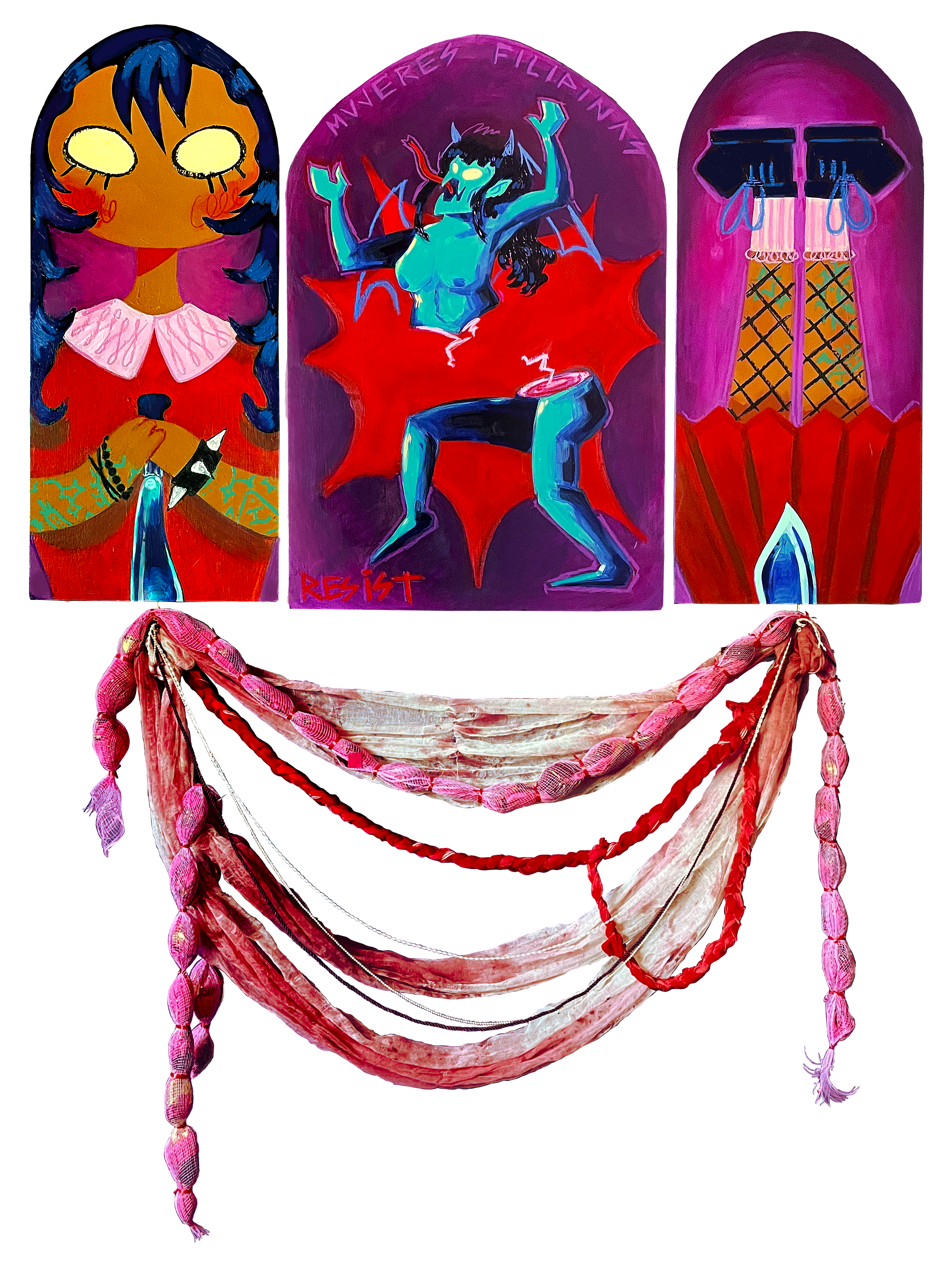
The manananggal has become a longstanding story in Filipino folklore, often appearing as a winged beast-like feminine creature whose body segments at the torso terrorizing children. However, this iteration of the manananggal was not cemented in Filipino culture until the point of Spanish colonization. It is said that Spanish friars, threatened by the roles of shamans held by women and queer folk, rewrote the manananggal to vilify those who defied Eurocentric, Catholic values.
The story of the manananggal, as well as other folktales, were used against the Filipino people in the destruction of their original cultures and society. It targeted so-called “uncontrollable women” and upkept the traditional gender roles we see today. Today, many Filipino youth look to the manananggal as a symbol of internal conflict and oppression. She is heralded as a figure who has torn herself apart to meet the expectations help up to her. She is figure at a crossroads, struggling at the hands of the ruling class and with her own identity; the ghost of a culture once lost. We cannot let the persistent influence of imperial rule continue to erase and demean our cultures and identity. We cannot let them divide and tear us apart.
2025, acrylic, fabric, yarn, and hooks on wood, 48″x60″
 Asher Perez