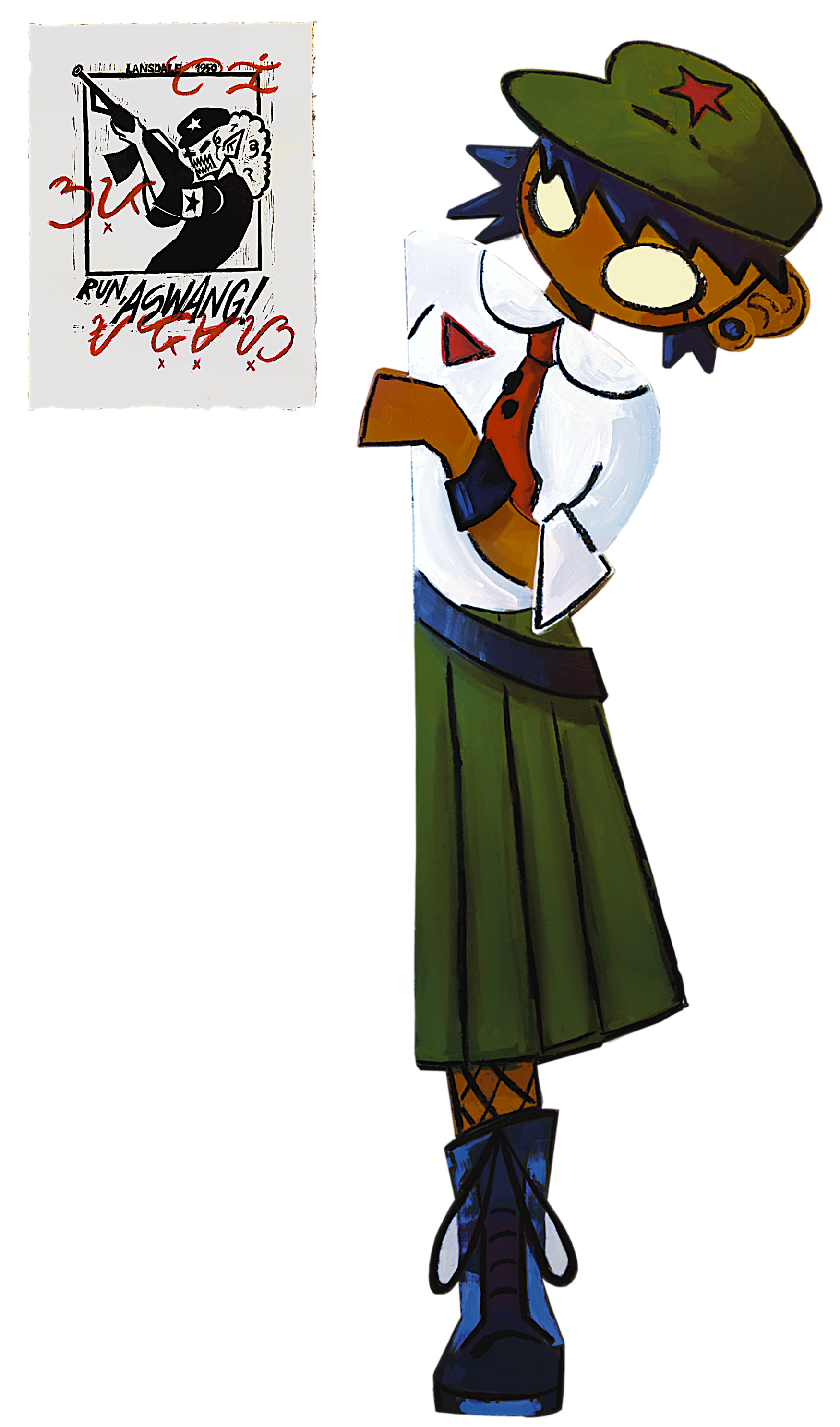
Throughout World War II, the Philippines struggled against Japanese occupation in their pursuit of becoming a sovereign nation, unreliant on imperialist interests. Consequently, many organizations developed in response to the intensifying oppression. These groups, such as the Hukbalahap, advocated for the rights and welfare of the people. They rallied for social and agricultural reforms following the defeat of the axis powers. However, as these organizations worked alongside the villagers of the countryside, American plans of expanding their sphere of influence loomed overhead.
Led by Lt. Edward Lansdale, intense counter-insurgency initiatives were launched against these resistance groups throughout the countryside. Many organizers were captured, imprisoned, and killed by American armed forces; but these acts of violence were largely left unrecorded to maintain the facade of “friend of the Philippines.” To further discourage others from organizing, Lansdale implemented a psychological operation convincing civilians that these activists were aswang, vampiric creatures from Philippine folklore. He had twisted the narrative to make people fearful of their own histories. They even went as far as ambushing patrolling civilians, leaving neck punctures on their bodies to propagate this “invasion of vampires.”
Today, this event is diluted into a story of “how the United States used ‘vampires’ to win a war.” However, those in the countryside recount the widespread paranoia and civil unrest it left behind. Counter-insurgency tactics like these are no stranger to us now. In this year alone, dozens of organizers have been killed or disappeared in the Philippines simply for supporting a struggling community. Just as we saw in the cruel persecution of Salem’s “witches,” we see activists worldwide villainized as “terrorists.” These are not errors rooted in ignorance; these are calculated moves by a ruling class seeking to maintain control and we cannot let them win. Get organized and get active in your community, from the U.S. to the Philippines.
2026; linocut on paper with acrylic and oil pastel on wood; print: 11″x17,” painting: 17″x56″

